Tooth decay symptoms can be easy to miss in the early stages. But catching them early makes treatment simpler and less invasive. Tooth decay happens when bacteria in plaque feed on sugars from food and drink, releasing acid that gradually wears away your enamel.
Caught early, it’s easy to treat but left unchecked, it gets more serious. The Office for Health Improvement & Disparities’ Adult Oral Health Survey 2023 found 41% of adults in England with natural teeth had obvious tooth decay, up from 28% in 2009, so it’s worth knowing what to look for.
The main tooth decay symptoms you should look out for:
Signs that your tooth might be decaying won’t necessarily all crop up at once. So here are the early symptoms to be aware of, to the decay in the early stages and seek treatment.
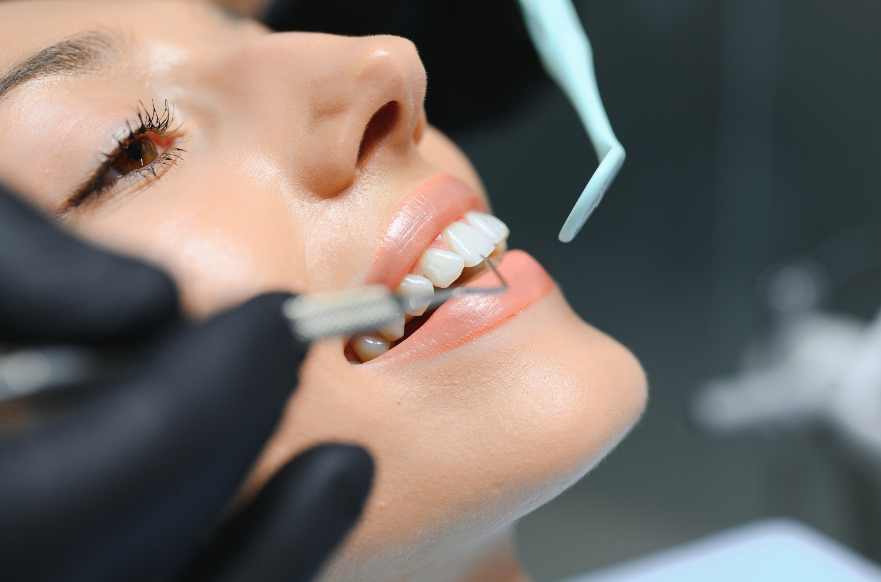
Early on, a cavity can look like nothing more than a white spot. As decay progresses, that spot typically darkens through tan or brown to black, and you may see or feel an actual pit. Because early cavities are genuinely hard to spot yourself, a check-up (with an X-ray where needed) is the most reliable way to catch decay before it’s visible.
A solid hygiene routine that includes brushing twice daily, flossing, and regular hygienist visits, is your best defence. If decay has already set in, it’s usually treated with a straightforward filling, and the earlier it’s caught, the simpler that tends to be.
Yes. Decay caught at the white-spot stage can often be halted or reversed with fluoride and better oral hygiene, before it becomes a true cavity needing a filling. We also offer Curodont™ Repair, a drill-free treatment that helps rebuild the tooth at this early stage.
Have you noticed any of these signs, or has it just been a while since your last check-up? Get in touch with our team, and we’ll take a look.