Losing a tooth, or several, can knock your confidence in ways you might not expect. Eating becomes a little more awkward, smiling in photos feels different, and suddenly you are faced with a list of unfamiliar options and a lot of opinions. The good news is that modern dentistry offers several reliable ways to replace missing teeth, and none of them is simply better than the others. The right choice depends on your mouth, your health, your lifestyle, and your budget. This guide compares dental implants vs dentures vs bridges in plain, friendly language, so you can walk into a consultation feeling informed and relaxed.
Before comparing them, it helps to understand what each option actually is.
Each of these tooth replacement options has a long track record, and each suits different situations. Understanding the basics is the first step towards deciding which may be right for you.
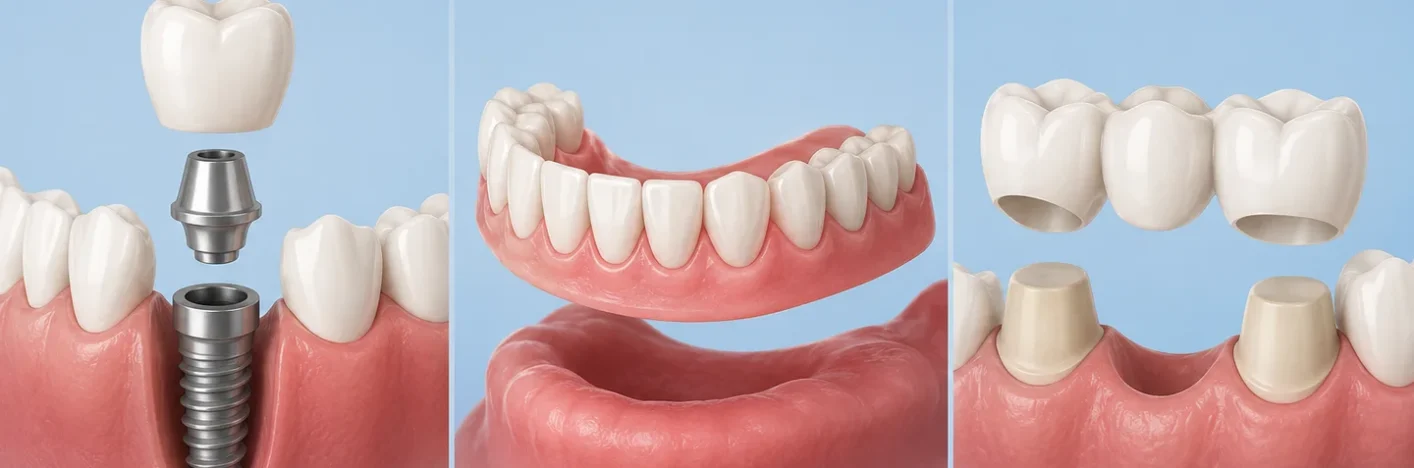
Dental implants are often described as the closest thing to a natural tooth, because they replace both the visible crown and the root beneath the gum. The jaw bone can fuse with the implant over a few months, which helps it feel stable and secure.
Some of the things people like about implants include the following.
There are some things to weigh as well. Implants usually involve a minor surgical procedure and a healing period of several months. They tend to cost more up front than other options, and they require enough healthy jaw bone and gum tissue. Smoking, certain medical conditions, and gum disease may affect suitability, so a thorough assessment is important.
A dental bridge is a popular fixed solution for replacing one or a few teeth next to each other. The false tooth, called a pontic, is joined to crowns that fit over the natural teeth on either side of the gap.
Here are some reasons people consider bridges.
The trade-offs are worth knowing too. To place a traditional bridge, the neighbouring teeth usually need to be reshaped to hold the crowns, which means removing some healthy tooth structure. Cleaning underneath a bridge takes extra care, and bridges may need replacing after some years. They also do not replace the root, so the bone under the gap can gradually shrink over time.
Dentures have helped countless people regain their ability to eat and smile, and modern versions look far more natural than many people expect. They are made from acrylic, sometimes with a metal framework, and are shaped to fit your gums and remaining teeth.
People often choose dentures for these reasons.
On the other side, dentures can feel bulky at first, and they may move slightly when eating or speaking. They need daily cleaning, regular relining as your gums change shape, and eventually replacing. Some people use denture adhesive for extra hold. If you like the idea of dentures but want more stability, implant-retained dentures are another option your dentist may discuss, which use a few implants to anchor the denture.
Here is a quick comparison to help you picture the differences. Keep in mind that these are general points, and your own situation may vary.
No single option wins every category, which is exactly why a personalised discussion matters.
The honest answer is that it depends. Here are a few questions that can help guide your thinking.
Your dentist will examine your mouth, may take X-rays or scans, and talk through the options that make sense. It is perfectly fine to ask for a written plan, a cost breakdown, and time to think it over.
Choosing between dental implants vs dentures vs bridges is a big decision, and you should never feel rushed or pressured. At Jiva Dental, our team will take the time to listen to your concerns, examine your mouth, and explain each option clearly so you can decide what feels right. Whether you are replacing a single tooth or several, we are here to guide you through your tooth replacement options at your own pace. Contact Jiva Dental today to book a consultation and take the first step towards a smile that feels comfortable and confident.
Q: Which is better, a dental implant or a bridge?
A: Neither is better for everyone. Implants do not rely on neighbouring teeth and may help support the jaw bone, while bridges are quicker and avoid surgery. Your dentist can explain which suits your case.
Q: Are dental implants painful?
A: Most people find the procedure comfortable thanks to local anaesthetic, and mild soreness afterwards is common and usually manageable. Your dentist can explain what to expect.
Q: How long do dentures, bridges, and implants last?
A: It varies. Many bridges and dentures last several years before needing replacement, and implants may last longer with good care. Habits, oral hygiene, and general health all play a part.
Q: Can I have implants if I have worn dentures for years?
A: Often yes, but it depends on the health and amount of your jaw bone. A scan and consultation will show what is possible.
Q: Can I replace a missing tooth later if I wait?
A: Many people do, though leaving a gap can allow neighbouring teeth to drift and the bone to change. It is worth discussing timing with your dentist.